



Paper cards
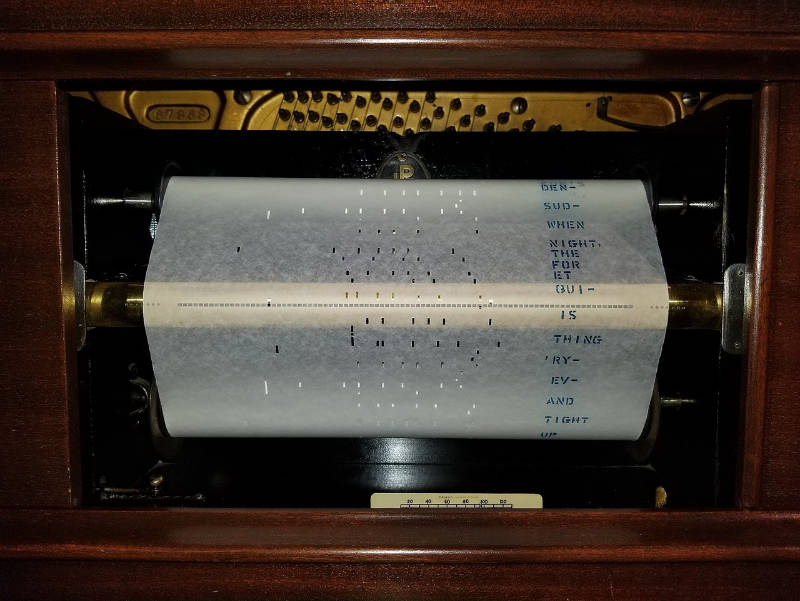
The first recording method that allowed the storage of some simple programs existed even before the existence of computers as we know them today – back in the 18th century. These were punched paper cards, which had a sequence of instructions written for textile machines or special pianos that played by themselves. They were in use until the 1970s, and had a capacity of 0.12 KB.
Paper tapes
Similar to paper cards was paper tape, which had a larger capacity. During World War II, this system was used by the Germans in the Colossus computer. Interestingly, in some places these systems are still used today in automatic vote counting and testing.
Magnetic tape
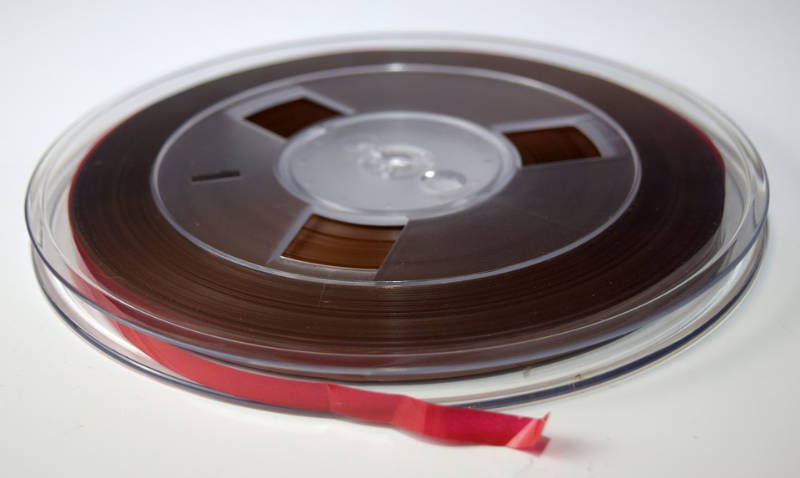
The successor was magnetic tape, a special plastic tape with a metal oxide coating with magnetic properties. Various data could be recorded on it – audio recordings, video, and the like. It could record large amounts of data, and at the same time greatly accelerated the recording and access processes for the recorded data. It began to be used in the 1950s.
The average magnetic tape had a capacity of 225KB, which meant that we needed 1920 paper cards to record the same amount of data.
Hard disk
This technology uses fast-spinning disks made of magnetic material. Access to data is now even faster. The first one was developed by IBM in 1956. It had a capacity of 5MB and was the size of an average room. This technology is still in use today, and capacities are up to several TB.
The first hard disk with a capacity of 5MB was therefore equivalent to 23 reels of magnetic tape.


Semiconductor units
In the late 1960s, the first semiconductor chips appeared that enabled data storage. They were made from a series of transistors, capacitors, diodes and other electronic elements. Among other things, they were also an integral part of the computer that helped take the first man to the moon. The leap was mainly in the speed of data access and the reduction of the physical dimensions of the memory elements. This technology was the basis for the memory units used today in USB sticks.
Floppy disks
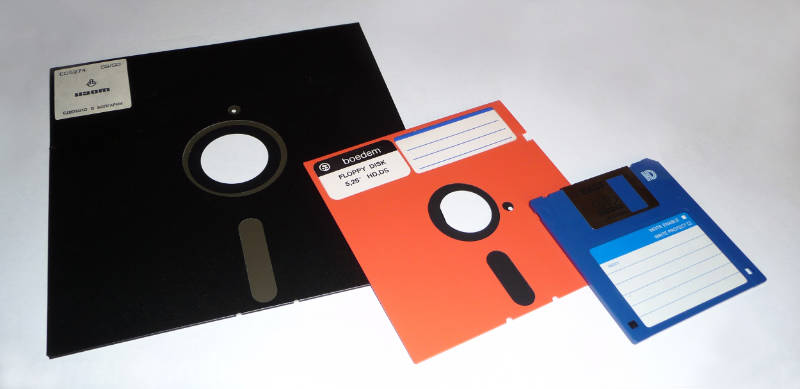
In the 70s of the 20th century, in addition to disco music, the first floppy disks also appeared. They were in a thin and yet resistant casing, which allowed for easy use and transfer of data from one computer to another. The best known are the small ones, which today only live as icons for storing data in the graphical interfaces of programs and devices. They had a capacity of 1.44 MB, which is approximately one picture that we take with a mobile phone in low resolution today.
4 floppy disks had a larger capacity than the first hard disk, which is 5.76 MB.

CD
In the 1980s, the optical disc appeared – the compact disc. It was used to record computer data and high-definition audio and video recordings. Today, CD drives are disappearing from laptops and desktops. One CD has a capacity of 700 MB.
To record the same amount of data as on one CD, you would need 486 classic floppy disks!
DVD
DVD or Digital Video Disc was originally intended for recording high-definition video recordings. It has the same dimensions and looks like a CD, but it is possible to record as much as 4.7 GB of data on it. In other words, it is a more compact CD :).
One DVD is enough for 6.7 CD discs.
FLASH drive or USB sticks
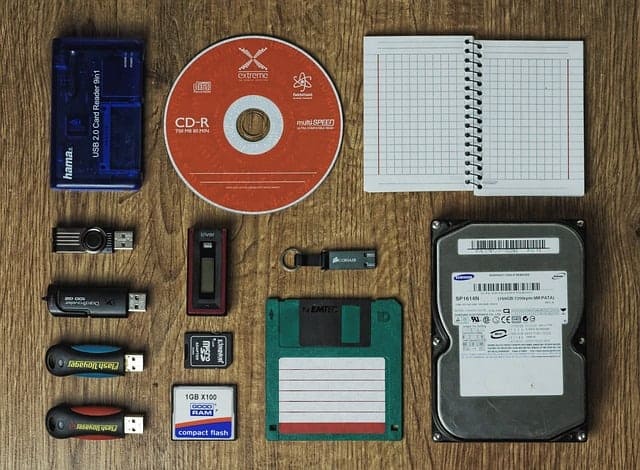
At the beginning of the 21st century, the first USB sticks as we know them today appeared. The first ones weighed around 30g. They had a capacity of about 100 MB. EEPROM recording technology was developed in the 1980s and came into use ten years later. With the advent of the USB 2.0 and USB 3.0 standards, there was a dizzying increase in the speed of writing and reading and an increase in the memory capacity of USB sticks. Today, sticks with a capacity of 1 TB or more are also available.
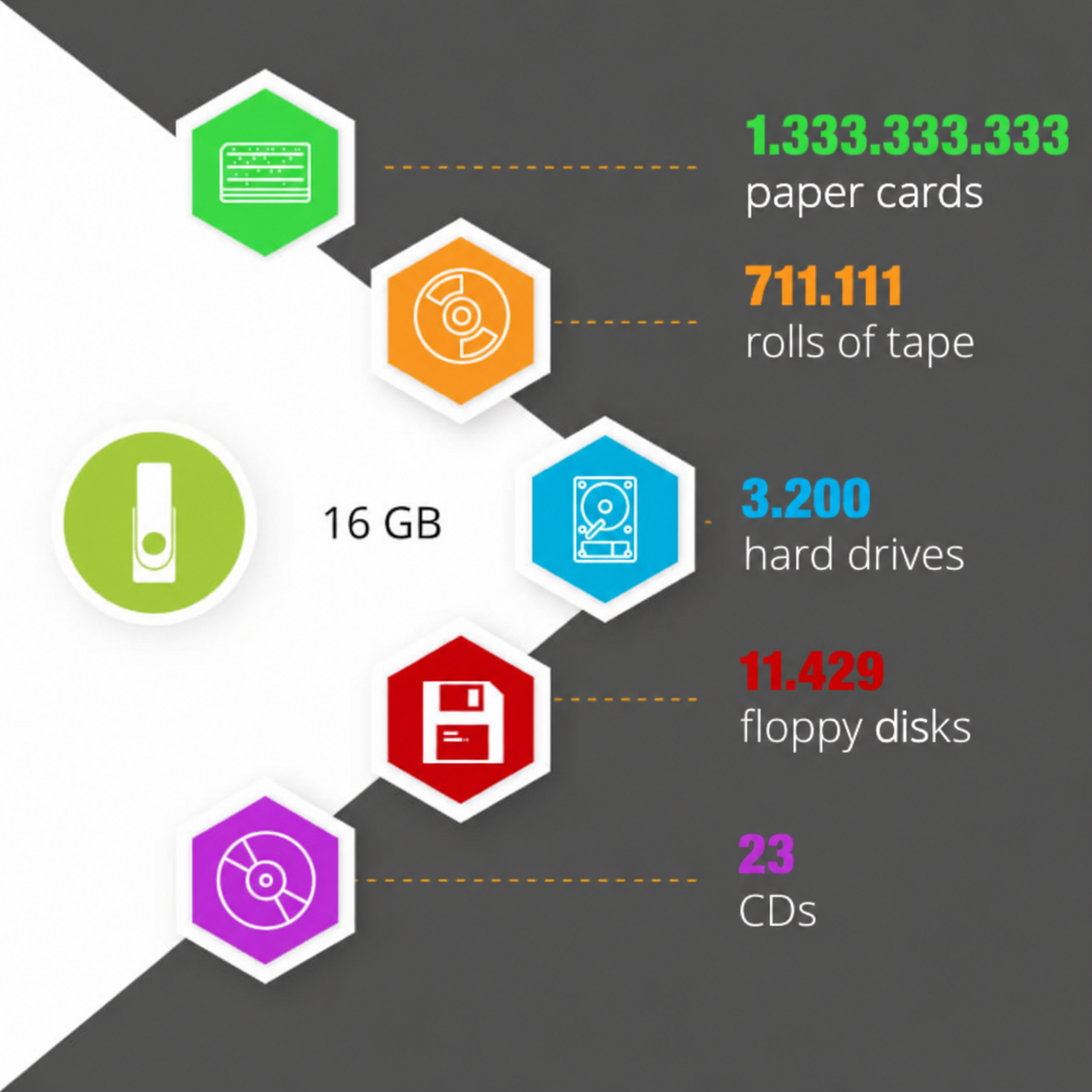
A USB Twister with a capacity of 16 GB is enough for 1333333333 card punches, 711111 magnetic tape reels, 3200 of the first room-sized hard drives, 11429 small floppy disks and 23 Cds.